Powered by ID Integration, Inc.


Healthcare organizations have long understood that limited visibility creates operational strain, whether that strain appears as extended equipment searches, delayed surgical workflows, or inconsistent inventory performance. What has evolved in recent years is the recognition that isolated tracking efforts are insufficient in complex, multi-campus health systems. Visibility must function as an integrated infrastructure rather than as a departmental enhancement.
In many hospitals, teams still spend valuable time searching for mobile medical equipment, reconciling inventory inconsistencies, or manually verifying workflow status across departments. When clinicians cannot quickly locate equipment, when surgical teams wait on missing assets, or when hospital equipment visibility varies from campus to campus, operational pressure spreads quickly throughout the organization.
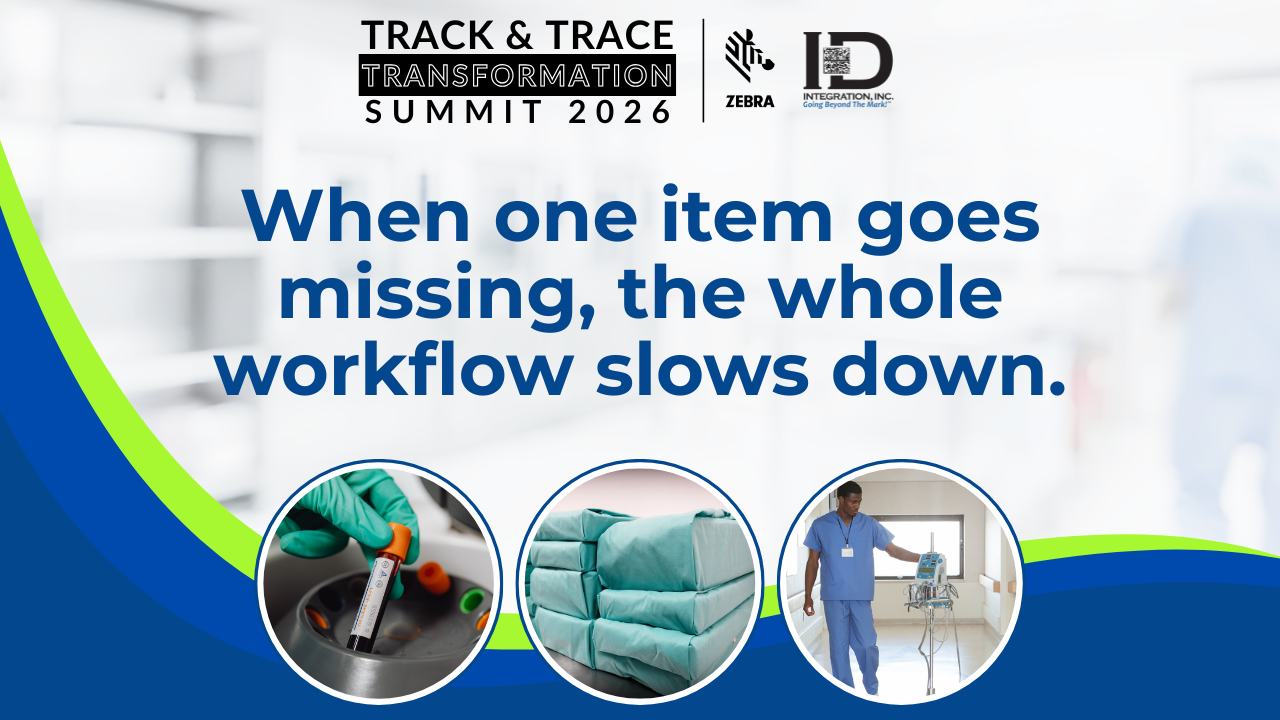
At the Track & Trace Transformation Summit 2026, leaders across clinical, operational, and IT disciplines examined how hospitals are transitioning from localized tracking initiatives to enterprise visibility strategies designed for long-term scalability. The Summit replay provides insight into what sustainable hospital asset tracking requires when organizations aim to move beyond pilots.
Many hospitals began with focused initiatives such as asset tagging within a single department or a limited healthcare asset tracking system designed to solve a specific operational pain point. These early efforts often delivered localized improvements in medical equipment tracking or asset utilization in hospitals, but they frequently lacked the architectural planning and governance structure required for enterprise expansion.
Summit discussions reinforced that hospital asset tracking must be treated as operational infrastructure. Data must integrate seamlessly into ERP and EHR platforms, executive sponsorship must guide phased deployment, and measurable objectives must define success from the outset.
Hospitals do not scale visibility by adding more dashboards. They scale by creating trusted workflow certainty across the enterprise.
Speakers identified several structural components necessary to support scalable healthcare asset tracking:
Visibility information must connect with enterprise systems to inform capital planning, supply chain strategy, compliance reporting, and operational decision-making.
Clear accountability across departments ensures that passive RFID hospital tracking initiatives mature rather than stall after initial implementation.
Structured expansion across facilities reduces risk and supports sustainable growth without overwhelming clinical teams.
Successful hospital equipment visibility programs demonstrate measurable impact in rental reduction, asset utilization, OR throughput, and supply chain resilience.
Passive RFID was discussed as a practical enabler of event-based visibility. Rather than attempting continuous real-time location monitoring of every device, many health systems are focusing on validating high-value workflow milestones such as:
This model strengthens operational certainty while minimizing disruption to clinical workflows. It also differentiates passive RFID hospital tracking from traditional RTLS approaches that prioritize continuous location data over workflow validation.
One recurring theme throughout the Track & Trace Transformation Summit 2026 was the risk of pilot fatigue. Without integration planning, executive alignment, and clearly defined enterprise metrics, even well-designed programs can remain confined to departmental scope.
Sustainable visibility programs are not built through isolated deployments alone. They emerge through architecture, integration, governance, and operational alignment that allow visibility to scale alongside the healthcare enterprise itself.
For health systems evaluating hospital asset tracking, RFID in healthcare, or broader workflow automation initiatives, the Summit replay offers a strategic framework for building durable visibility infrastructure that supports long-term operational resilience.
Need expert guidance?
Call us (425) 438-2533
