
Powered by ID Integration, Inc.

For years, hospitals tested visibility in isolated pilots. A department-level asset tracking initiative. A tray proof-of-concept. A limited inventory experiment.
That phase is ending.
Today, health systems are confronting a different reality. Equipment appears scarce despite sufficient inventory. OR delays are tied to tray uncertainty. Specimen chain-of-custody scrutiny is rising. Supply chain volatility exposes recall and expiration risk. Staffing shortages magnify every inefficiency.
The question is no longer whether visibility matters.
The question is how to operationalize it at an enterprise scale.
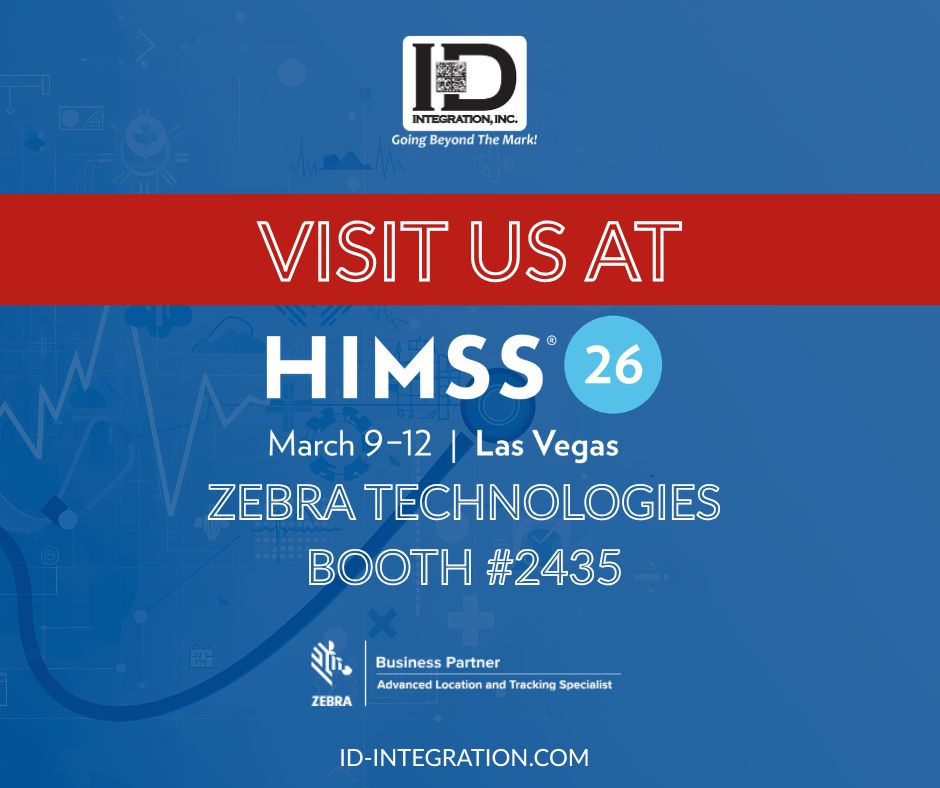
At HIMSS 2026, ID Integration will be in the Zebra Technologies Pavilion at Booth #2435 to discuss what it takes to build a reliable visibility infrastructure that supports capital planning, clinical throughput, compliance, and multi-site growth.
Asset Intelligence
Move beyond device location to utilization analytics that reduce unnecessary rentals and support data-driven capital allocation.
Surgical Tray Intelligence
Confirm wrapped trays instantly. Reduce reprocessing waste. Protect OR throughput. Strengthen compliance without increasing manual burden.
Specimen Continuity
Automate handoff validation across perioperative and lab environments to protect patient safety and audit defensibility.
Inventory Confidence
Improve expiration management and recall readiness with automated capture that integrates directly into ERP and clinical systems.
Technology alone is not a transformation. Architecture, governance, executive sponsorship, and phased deployment strategy determine whether visibility scales or stalls.
At HIMSS, our conversations will focus on measurable ROI, integration strategy, and how to avoid pilot fatigue while building a durable operational foundation.
If you are evaluating long-term modernization initiatives, let’s have a strategic discussion at Booth #2435. Reach out to our team here to schedule a time, or simply stop by the booth.
Enterprise visibility does not begin or end with equipment location. It extends across clinical workflows, sterile processing, laboratory operations, and supply chain governance.
If you are evaluating modernization initiatives, you may also find these resources valuable:
Why Hospital Tracking Programs Stall — and How to Scale Without Starting Over
EHR, LIS, and CMMS Integrations for Hospital Assets & Specimen Tracking
Hospitals and medical device manufacturers live with the same blind spots: trays that go missing between SPD and the OR, equipment that drifts across units, and manual updates that arrive too late to change an outcome. Those gaps slow care, erode margins, and strain relationships. There is a practical way forward that boosts visibility for both sides without forcing a single platform or exposing data that should remain private.
Start with stable identifiers and passive, automated capture. Barcodes and 2D codes remain the clinical labels. Passive RFID adds fast “last-seen” and readiness signals, even through sterile wrap. Fixed read zones and targeted handheld scans turn movement into simple events that your current systems can use.

Fewer late starts in the OR.
Readiness is visible before setup, so teams avoid unwrapping the wrong tray and triggering avoidable re-sterilization and cancellations.
Faster equipment turns.
Reliable last-seen by unit curbs hoarding and rentals, while preventive maintenance and recalls close on time.
Lower labor pressure.
Nurses and transport staff spend less time hunting and more time on care.
Real loss avoidance.
Passive tagging at scale cuts tray loss that can reach seven figures annually.
Field visibility after deployment.
See where sets actually reside and how long they dwell, so billing, replenishment, and refurbishment move on facts, not phone calls.
Lower tracking costs.
Replace expensive active tags with a passive model that scales across hundreds of thousands of trays.
Better service to hospitals.
Fewer misroutes, faster replacements, and cleaner audits strengthen long-term relationships.
Identifiers:
Keep barcodes for documentation. Add passive RFID to read through sterile wrap, read many items at once, and capture movement without manual scans.
Read zones:
Place fixed readers at receiving, storage rooms, case-pick areas, OR corridor thresholds, elevators, and sub-sterile doors. Ceiling mounts fill coverage gaps without cluttering workspaces.
Handheld recovery:
When something goes off-route, staff follow signal strength to find the specific tray or device quickly, even in racks or closed rooms.
Mobile computing:
Put lookups, secure messages, and checklist tasks into one clinical handheld or tablet so teams act in the flow.
Interfaces:
Publish concise readiness and last-seen events into the OR board, CMMS, and service lists. Keep patient identity inside hospital systems. Share only operational signals with manufacturers.
You do not need a massive rollout to see value. Prove it fast, then scale with confidence.
Weeks 1–3: Choose the route and tag the class
Select a common tray family or a high-movement equipment class on a busy route. Install a handful of read zones. Train a small superuser cohort.
Weeks 4–6: Turn on the signals
Publish tray readiness and last-seen by unit. Enable handheld recovery for exceptions. Start weekly reviews with periop, clinical engineering, and supply chain.
Weeks 7–10: Measure and adjust
Tune read zones, address outliers, and confirm that alerts are actionable. Expand only after the metrics improve.
Weeks 11–13: Broadcast results and decide what’s next
Share the before/after, rebalance inventory, and pick the next class or route.
Shared visibility does not require shared systems. It requires shared signals.
This model aligns financial performance, operational readiness, and patient safety. It replaces manual reconciliation with automated evidence and gives both sides confidence that the right trays and devices are where they should be.
On April 22, 2026, leaders from hospitals and medical device manufacturers will meet to compare what works and what scales, from SPD and OR readiness to clinical equipment availability and field visibility. Expect real case studies, measurable ROI, and a clear 90-day action plan.
Learn more and reserve your seat.
Specimen Chain-of-Custody 101
Practical patterns to prevent mix-ups from OR to lab.
Hospital Equipment Tracking
Find equipment fast and improve patient care.
